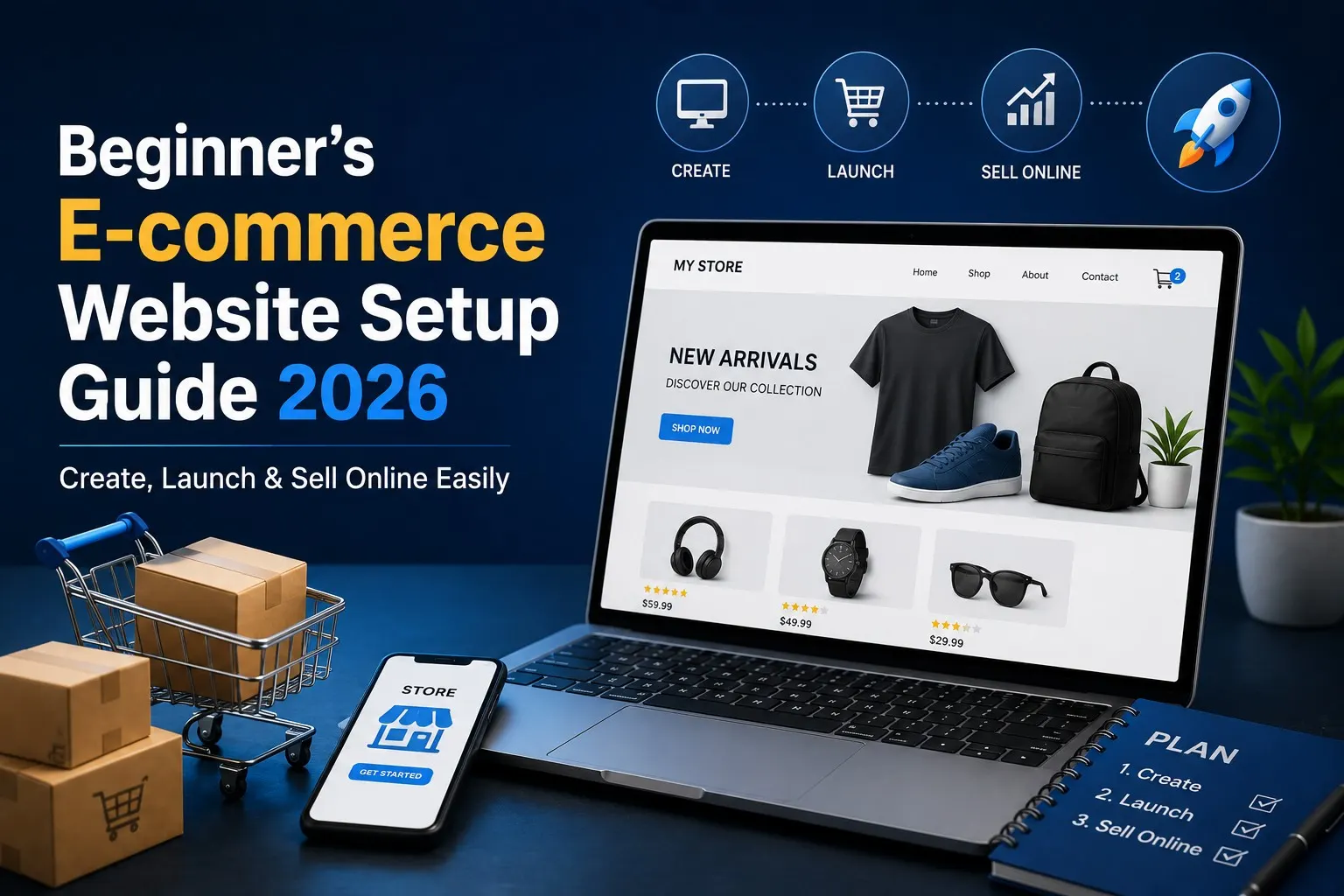
Beginner’s E-commerce Website Setup Guide 2026 – Create, Launch & Sell Online Easily
- By Anis Ur Rahman
- 17 Aug, 2025
Last Updated: 11 May 2026 | Read Time: 10 Minute
Why You Need This Guide: Your Journey to Online Success Starts Here
If you’ve ever dreamed of selling products online but felt overwhelmed by the tech, this guide will make it simple. By 2024, online retail was expected to account for around 16% of all retail transactions in the United States. Meanwhile, Bangladesh’s e-commerce industry, worth $6.5 billion in 2022, is on a strong growth trajectory.
This complete guide will take you from zero to hero in e-commerce. You'll learn everything from choosing the right platform to setting up payments and getting your first sale.
What you'll discover:
- How to build an e-commerce website (even with zero coding skills)
- Which platform works best for beginners
- How to set up secure payments and shipping
- Real costs involved (with budget-friendly options)
- Special tips for Bangladeshi entrepreneurs
Let's bring your business idea to life.
What Is E-commerce? Understanding the Basics

E-commerce (electronic commerce) means buying and selling products or services online. It's like having a digital storefront that never closes, where customers can browse, shop, and pay 24/7.
The 4 Main Types of E-commerce:
- B2C (Business to Consumer) - You sell directly to customers (like Amazon)
- B2B (Business-to-Business) – A model where companies sell products or services directly to other businesses, often for bulk purchases or long-term partnerships.
- C2C (Consumer-to-Consumer) – A marketplace approach where individual consumers trade or sell goods directly to other buyers through platforms like eBay
- C2B (Consumer to Business) - Individuals sell services to businesses
Quick FAQ: Common E-commerce Questions
Q: Can I create my e-commerce website?
A: Absolutely! You don't need coding skills. Platforms like Shopify and WooCommerce make it easy.
Q: How much does it cost to start?
A: You can start for as low as $29/month with Shopify or ₹15,000-25,000 for a basic WordPress setup.
Q: Is it safe to sell online?
A: Yes, when you use secure payment gateways and SSL certificates. Modern platforms include security features by default.

Step 1: Choosing Your Platform – A Key Part of the Beginner-Friendly E-commerce Website Setup Guide
Picking the right platform is like choosing the foundation for your house. Get this wrong, and everything else becomes harder.
Top Platforms for Beginners in 2025:
Shopify: The Easiest Option
Best for: Complete beginners who want everything done for them
Pros:
- No coding required
- Built-in payment processing
- Mobile-responsive themes
- 24/7 customer support
Cons:
- Monthly fees ($29-$299)
- Transaction fees on external payments
- Limited customization without coding
WooCommerce: The Flexible Choice
Best for: Users comfortable with WordPress
Pros:
- Free to use (only hosting costs)
- Unlimited customization
- Thousands of free plugins
- Complete control over your data
Cons:
- Requires WordPress knowledge
- You handle security and updates
- Need to find hosting
Platform Comparison Table

Step 2: Domain, Hosting & Technical Setup
Best Hosting Options for Bangladesh:
Ummah Host BD (Local BDIX)
- Fast local speeds, 24/7 Bangla support
- Cost: ৳1500-5,000/year
- Best for: Local businesses targeting Bangladeshi customers
Rendcpanel
- International reputation, reliable uptime
- Cost: $3-$10/month
- Best for: International expansion plans
Read our complete guide 2026 : Best & Fastest BDIX Hosting Providers in Bangladesh
Essential Security Setup
- SSL Certificate: Ensures data transmitted between your website and customers is securely encrypted. Most hosting providers include this for free.
- Regular Backups: Set up automatic daily backups. If something goes wrong, you can restore your store quickly.
- Create robust passwords with a minimum of 12 characters, incorporating numbers, symbols, and a mix of letters for added security.
Read our detailed guide 2026 : Web Hosting Glossary For Small Business

Step 3: Payment Gateway Setup (Getting Paid Safely)
Payment gateways process customer payments securely. Think of them as digital cash registers that handle credit cards, mobile banking, and online payments.
Best Payment Gateways for Bangladesh:
bKash Merchant
- Transaction Fee: 1.85%
- Setup: Requires a trade license
- Best for: Local customers who prefer mobile payments
Nagad Merchant
- Transaction Fee: 1.5-2%
- Setup: Business verification required
- Best for: Growing mobile payment user base
SSLCommerz
- Transaction Fee: 2-3%
- Features: Accepts cards, mobile banking, and internet banking
- Best for: Businesses wanting multiple payment options
International Options:
- PayPal: 3.49% + $0.49 per transaction (good for international customers)
- Stripe: 2.9% + 30¢ per transaction (developer-friendly)
Step 4: Product Management & Store Setup
Creating Great Product Pages
Essential Elements:
- High-Quality Images: 5-7 photos minimum from different angles
- Compelling Descriptions: Lead with benefits, use bullet points
- Customer Reviews: Enable review systems for social proof
- Clear Pricing: Include all costs upfront
Mobile-Friendly Design (Critical in 2025)
Over 60% of online shopping happens on mobile devices. Your store must work perfectly on phones and tablets.
Mobile Optimization Checklist:
Touch-friendly buttons (minimum 44px)
Fast loading (under 3 seconds)
Easy navigation with a thumb
Readable text without zooming
Simplified checkout process
Shopping Cart Must-Haves:
- Save for later functionality
- Guest checkout option
- Multiple payment methods
- Clear shipping costs before checkout
- Security badges visible during checkout

Step 5: Business Model Decisions
Dropshipping vs. Own Products
Dropshipping: Selling Without Inventory
How it works: You list products. When a customer places an order, the supplier handles the shipping directly to them.
Advantages:
- Low startup costs (no inventory investment)
- Location independence
- Easy to test new products
Disadvantages:
- Lower profit margins (15-20% typical)
- Less control over shipping and quality
- Higher competition
Own Products: Full Control Model
Advantages:
- Higher profit margins (40-60% possible)
- Complete quality control
- Brand building opportunities
Disadvantages:
- Higher upfront investment
- Inventory storage needed
- Risk of unsold inventory
Digital Products: The High-Margin Option
Selling digital products (courses, ebooks, software) offers 95%+ profit margins with no shipping costs.

Marketing Tips from the Beginner-Friendly E-commerce Website Setup Guide
SEO for E-commerce Beginners
Basic SEO Checklist:
- Keyword Research: Target long-tail keywords (3-4 words)
- On-Page SEO: Include keywords in product titles, write unique meta descriptions
- Technical SEO: Ensure fast loading, create an XML sitemap
Getting Your First 10 Sales
1. Friends and Family
Ask close contacts to be your first customers. Offer them a special discount.
2. Grand Opening Promotion
- Limited-time launch discount (20-30% off)
- Free shipping for the first 50 orders
3. Social Media Marketing
Focus on 2-3 platforms:
- Facebook: Great for local businesses
- Instagram: Perfect for visual products
- TikTok: Excellent for viral marketing
Email Marketing
Email provides the highest ROI. Set up:
- Welcome series for new subscribers
- Abandoned cart recovery emails
- Regular newsletters with valuable content
Check Top Optimization Tips & Mistakes to Avoid : Website SEO Guide in 2025

Realistic Startup Costs (2025)
Budget Option (৳15,000-25,000):
- Domain: ৳1,350/year
- Hosting: ৳6,000/year
- WordPress + WooCommerce: Free
- Theme: ৳3,200-8,000
- Initial marketing: ৳5,000
Professional Option (₹50,000-100,000):
- Shopify subscription: ৳25,000/year
- Premium theme: ৳10,000
- Photography: ৳15,000
- Marketing budget: ৳30,000
- Initial inventory: ৳20,000+
Ongoing Monthly Costs:
- Platform fees: ৳2,500-25,000
- Marketing: ৳10,000-50,000
- Payment processing: 2-3% of sales
Read Updated 2026 : Top Domain Hosting Price Comparison in Bangladesh
Special Focus: E-commerce in Bangladesh
Local Advantages to Leverage:
BDIX Hosting Benefits:
Using BDIX (Bangladesh Internet Exchange) connected hosting provides faster loading speeds for Bangladeshi visitors.
Local Payment Preferences:
- bKash (most popular)
- Nagad (government-backed)
- Rocket (Dutch-Bangla Bank)
- Cash on Delivery (still important for trust)
Cultural Considerations:
- Include Bengali language option
- Respect religious holidays in marketing
- Use local phone numbers for customer service
Success Story: Local E-commerce Growth
Many Bangladeshi entrepreneurs have built successful online businesses by focusing on local needs, using familiar payment methods, and providing excellent customer service in Bengali.
Your 30-Day Action Plan
Week 1: Foundation
- Choose your e-commerce platform
- Register a domain name
- Set up hosting account
Week 2: Setup
- Select and customize a theme
- Set up payment gateways
- Create essential pages (About, Contact, Policies)
Week 3: Products
- Add first 10-20 products
- Write compelling product descriptions
- Take professional product photos
Week 4: Launch Preparation
- Install Google Analytics
- Set up social media accounts
- Plan launch marketing campaign
See A Full Guide 2026: Best Web Hosting for Small E-Commerce Businesses in Bangladesh
Common Mistakes to Avoid
- Perfectionism Paralysis: Don't wait for everything to be perfect. Launch and improve.
- Ignoring Mobile Users: Test your store on multiple devices before launching.
- Poor Product Photos: Invest in good photography or learn basic skills.
- Complicated Checkout: Aim for 3 steps maximum.
- No Marketing Budget: Plan for paid advertising, especially initially.
Key Metrics to Track
- Conversion Rate: Visitors who make purchases (aim for 2-3%)
- Average Order Value: How much customers spend per order
- Cart Abandonment Rate: People who add items but don't buy (industry average: 70%)
- Customer Acquisition Cost: How much do you spend to get one customer
Conclusion: Your E-commerce Journey Starts Now
Starting an e-commerce business in 2025 is both exciting and challenging. Global e-commerce sales are expected to reach $8.1 trillion by 2026. The opportunity is enormous.
Key takeaways:
- Choose the right platform for your needs and budget
- Focus on user experience and mobile optimization
- Set up secure, local payment methods
- Start simple and improve based on customer feedback
Remember, every successful e-commerce business started with someone taking the first step. Amazon began as an online bookstore. Your journey starts with choosing your platform and setting up your first product.
Ready to Start?
- Choose your platform (Shopify for ease, WooCommerce for flexibility)
- Register your domain name
- Set your launch date (give yourself 30 days)
- Start building!
The best time to start was yesterday. The second-best time is now. Your customers are already online, searching for products like yours. Don't make them wait any longer.
Good luck with your e-commerce journey! Remember, every expert was once a beginner.
Get More Here :
How to Register a Domain Name in Bangladesh (Step-by-Step Guide)

Author By
Anis Ur Rahman
Anis Ur Rahman writes domain and web hosting–related articles on behalf of Ummah Host BD. He works with domain name selection, web hosting, BDIX hosting, and website performance, and creates informational guides based on practical experience to help users make informed decisions. His writing focuses on providing reliable, easy-to-understand, and decision-supportive content.
Search Blog
Categories
- Problem Solving 3
- RDP Hosting 4
- SMS Service 17
- IP Number 11
- Reseller Hosting 5
- Promo Offer 2
- Achieve 3
- SSD Hosting 5
- cPanel Hosting 7
- BDIX Hosting 7
- Email Hosting 4
- Dedicated Server 7
- User Guide 0
- Security 4
- Online security 6
- Business 5
- SEO 3
- VPS Hosting service 31
- Manage Hosting 1
- domain hosting service 29
- Domain 1
- Hosting 40